
Automated external blinds cut cooling costs by up to 70%, storage with a HEMS raises PV self-consumption to 70-80%. Data from the Polish market.
# A smart home is not a gadget: measurable savings, security and property value
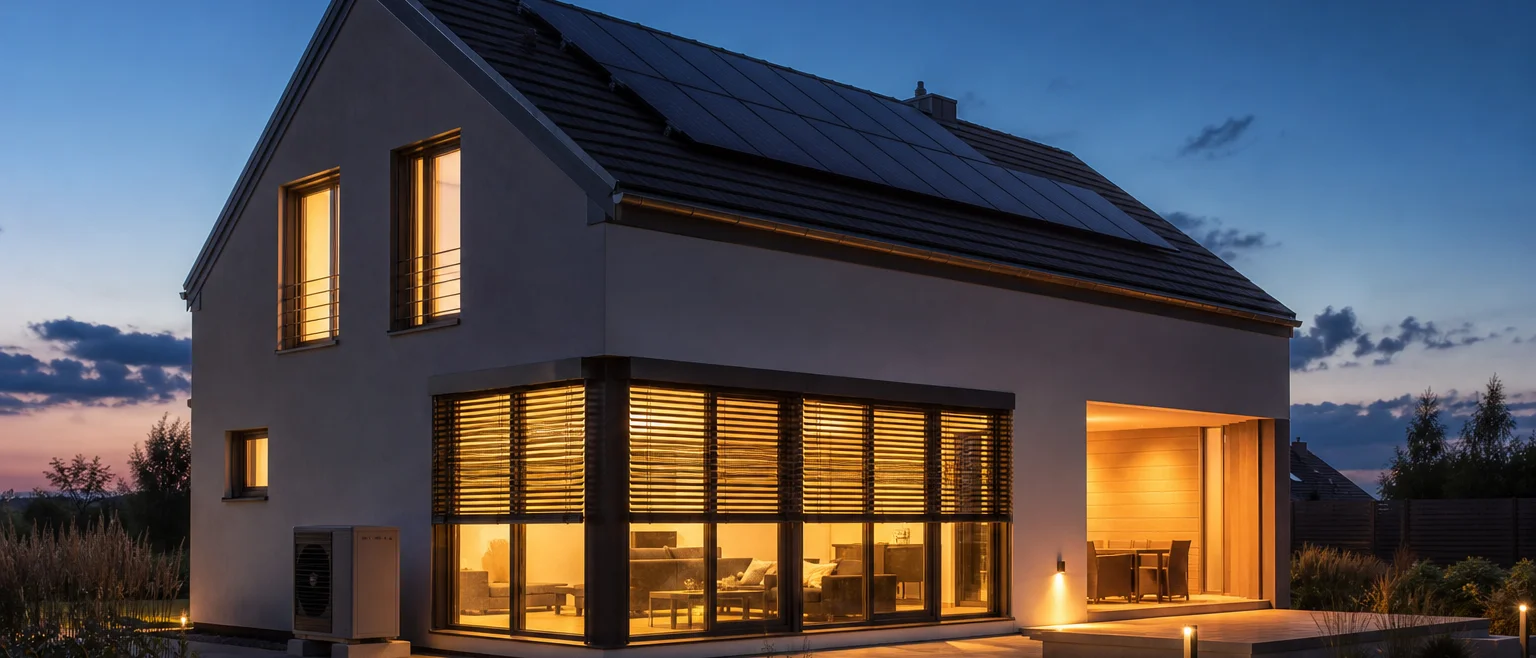
Automated external blinds lower indoor temperature in summer by 4 to 7 degrees Celsius and cut air conditioning energy use by up to 70%, according to analyses by the independent Carbone 4 institute[1]. Battery storage controlled by an energy management system raises self-consumption of PV electricity from around 30% to 70-80%[2], which directly lowers a net-billing prosumer's bills. And a ThinkCo study[3] found that 84.4% of Poles believe home automation directly increases the market value of a property.
These are not arguments of the "turn off the lights from your phone" kind. These are numbers you can put into a household budget. Using Poland as the example, this article shows where the money actually is: in energy, in security, and in the value of the building itself.
# Where the gadget label comes from
Poles declare enthusiasm for home technology but rarely use it to its full extent. According to a Future Mind study[4], 85% of respondents consider home control apps useful, yet only about one in eight (roughly 12.5%) actually runs a complete automation system[5].
At the same time, as the ThinkCo report[3] shows, 75% of households own at least one smart device. Most often these are televisions (54%), washing machines (46%) and refrigerators (41%): appliances that almost never work together within a single system. A robot vacuum and a heating programmer are individual conveniences, not building automation.
That is exactly where the gadget label comes from. A single device with an app delivers a bit of comfort and zero measurable savings. An integrated system that controls heating, window shading and energy flow behaves entirely differently. The difference between a system and a collection of devices is explained in our guide What is a smart home and how does it work?
Market data confirms this is no niche: according to Oferteo research[6], around 30% of newly built single-family houses in Poland already include smart home elements. And tens of thousands of them are built every year: in 2025 the Polish building supervision authority issued 90,869 permits for single-family houses, 10.2% more than a year earlier[7].
# Savings, part one: automated external shading
The most underrated element of home automation in Poland is external roller shutters and facade blinds. According to industry data[8], they are designed into only about 10% of new residential projects, compared with around 38% in the Czech Republic and around 75% in France.
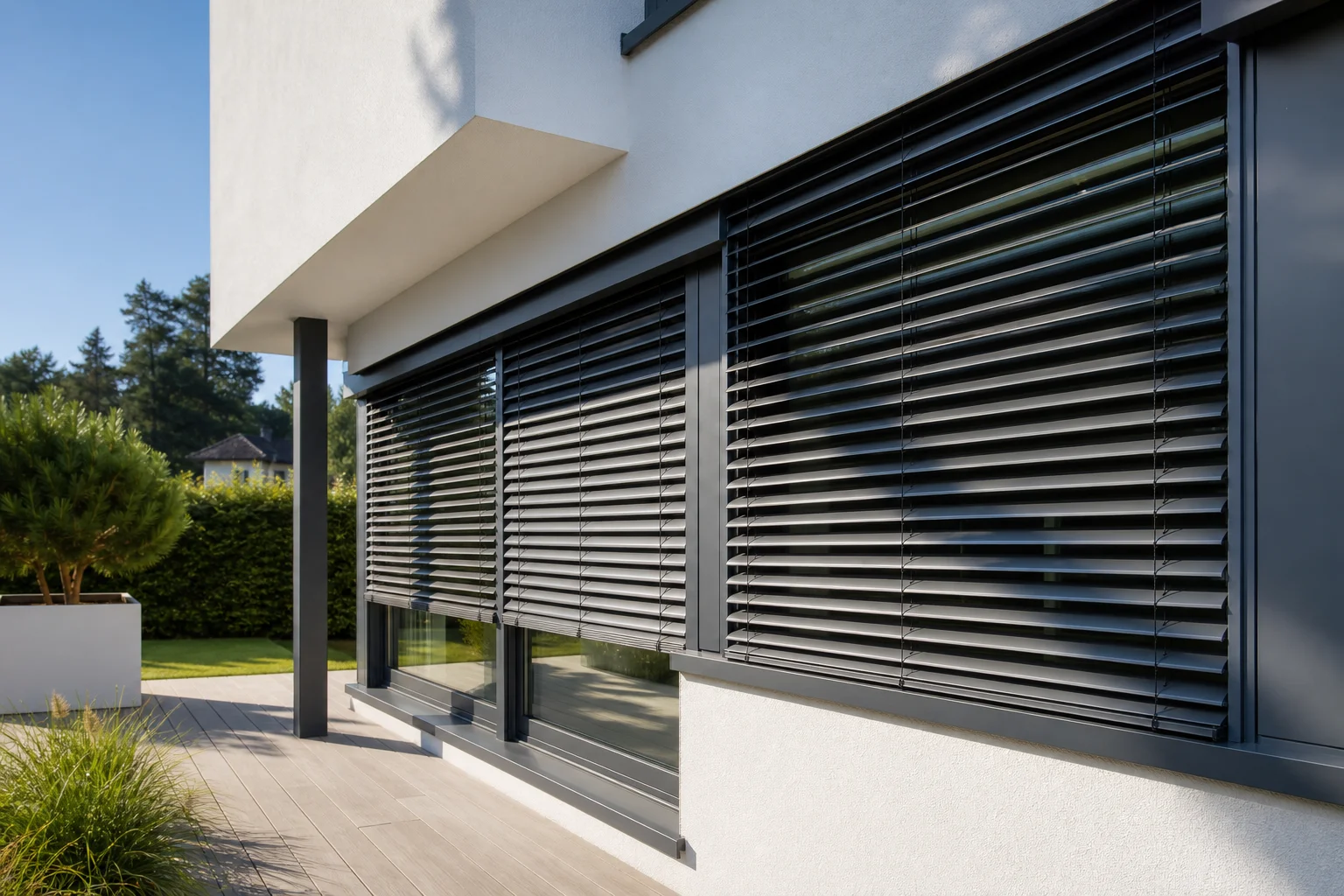
Meanwhile the effect of shading on a house's energy balance is very concrete. The figures below come from a study by the independent Carbone 4 institute[1]:
| Season | System behaviour | Effect |
|---|---|---|
| Summer | Automatic lowering of blinds on the sun-facing side | Indoor temperature 4-7°C lower, air conditioning energy use down by up to 70% |
| Winter, daytime | Raising south-facing blinds | Free heat gains from solar radiation |
| Winter, night | Closing shutters after dusk | An air cushion at the glazing, heating costs down by 10-30% |
The key word is "automatic". Nobody manually lowers the blinds every day at the right hour, on the right side of the house. A system integrated with a weather station does it on its own: in winter it catches the southern sun and closes the shading right after sunset, in summer it does the opposite and keeps rooms from overheating.
# Savings, part two: energy management in the era of dynamic tariffs
Photovoltaics without automation no longer adds up economically. Under the Polish net-billing scheme, hourly prices on the Polish Power Exchange can drop below zero: a low of -70.20 PLN/MWh was recorded in March 2025[9]. A prosumer without storage and without control gives energy away at noon for next to nothing, then buys it back in the evening at peak rates.
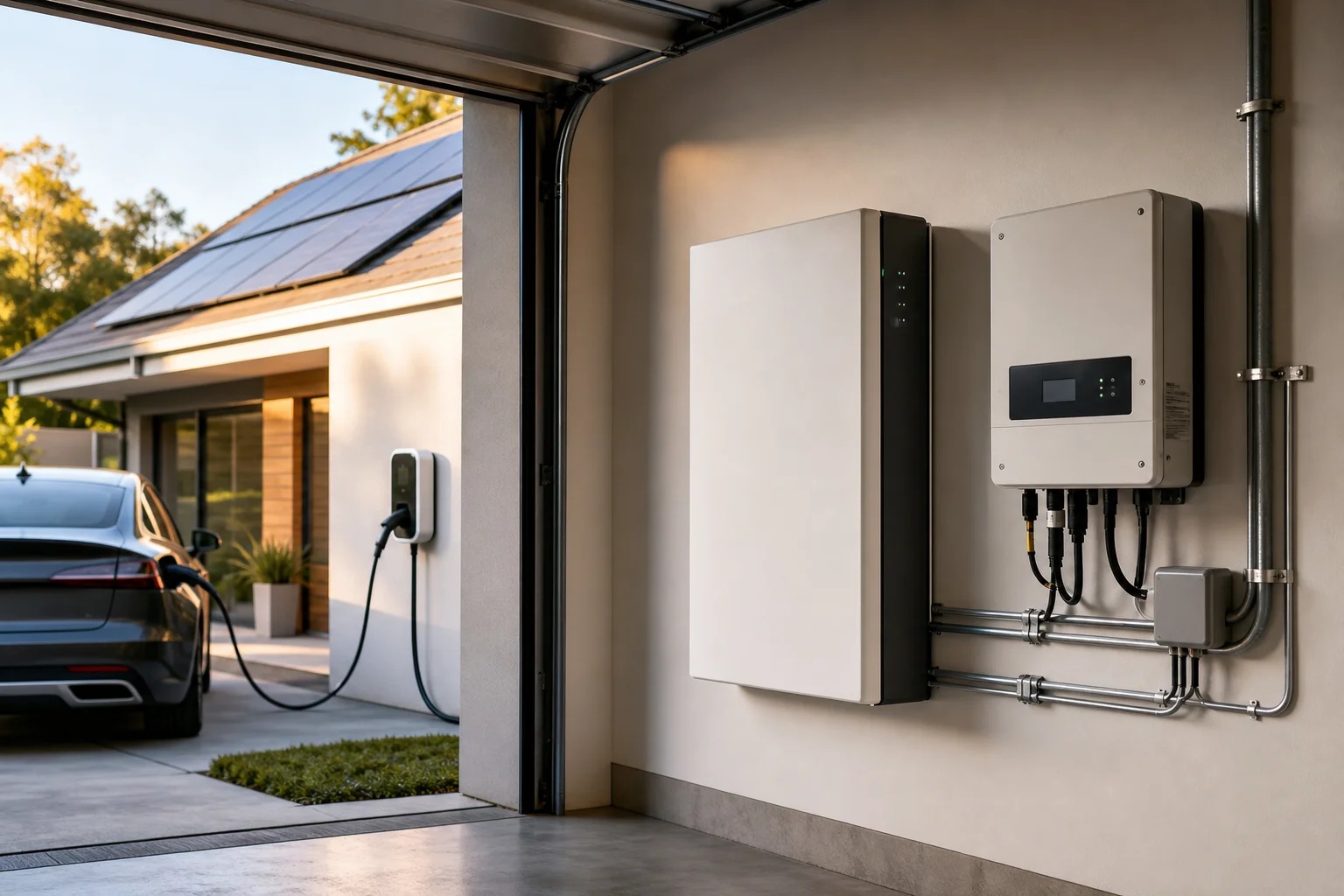
A Home Energy Management System (HEMS) reverses that logic. It routes PV surplus first to the house's current needs, then to the battery, then to a thermal buffer, and only as a last resort to the grid. With multi-zone and dynamic tariffs comes price arbitrage: charging the battery and the electric car with cheap electricity (from 0.07 PLN/kWh on Tauron's weekend offer[10]) and using the stored energy in the evening, instead of buying it from the grid at the full retail rate of around 1.04-1.10 PLN/kWh gross in the standard G11 tariff in 2026[22].
The effect of this kind of automation is measurable: a well-sized battery controlled by such a system raises self-consumption from around 30% to 70-80%[2], so most of the electricity from the roof stays in the house instead of going back to the grid for next to nothing. On top of that, the Polish state subsidises it. The maximum grant amounts below are compiled from the official government pages of the "Mój Prąd" programme[11][13]:
| Component | Maximum grant | Key condition |
|---|---|---|
| Electricity storage (net-billing) | up to 16,000 PLN | min. 2 kWh capacity, up to 50% of eligible costs |
| Photovoltaic microinstallation | up to 7,000 PLN | 2-20 kW capacity, new connections require electricity or heat storage |
| Heat storage (buffer / DHW tank) | up to 5,000 PLN | tank fed by a heat pump or electric boiler |
| HEMS/EMS energy management system | up to 3,000 PLN | requires installing electricity or heat storage at the same time |
In parallel, the "Czyste Powietrze" (Clean Air) programme offers up to 135,000 PLN in 2026 for heat pumps, insulation and heat recovery ventilation, conditional on a mandatory energy audit[14]. The national environmental fund NFOŚiGW is also preparing a home battery support programme financed from the Modernisation Fund, with a budget of up to 1 billion PLN for 2026-2030: grants of 800 PLN per 1 kWh of capacity (up to 16,000 PLN per battery), covering at least 62,500 home batteries[12].
# Security that acts on its own
Among investors who chose a smart home, security systems rank near the top. According to an Oferteo analysis published by PKO BP[15], 58% install alarms, 51% environmental sensors detecting smoke, gas, carbon monoxide and flooding, and 49% cameras. This is a global trend: according to IDC forecasts[16], home monitoring and security is the fastest-growing smart home category, expected to account for over a quarter of worldwide device shipments by 2028.
The economics of security work differently than energy, but they are just as real. A flood sensor paired with an automatic valve shuts off the water before a burst hose ruins the floor. A carbon monoxide detector can trigger ventilation and a notification, not just a local siren. Presence simulation (lights and blinds following everyday patterns) deters break-ins more effectively than a security company sticker.
Integration is the precondition. A camera with its own app, an alarm with a second one and a flood sensor with a third will never form a scenario in which smoke detection raises the blinds, turns on all the lights and clears the evacuation route.
# Property value: automation enters the appraisal
The real estate market already prices in automation, though supply lags behind. Otodom listing data[17] shows that only 4% of property sale listings mention smart solutions. The demand side looks entirely different: 84.4% of Poles believe a smart home system raises the market value of a property (ThinkCo study[3]), and 60.4% are willing to pay more for such a house (CBOS study for Skanska[17]).
Then there is the regulatory turning point. The EU's EPBD directive, mandatory for transposition from 29 May 2026, introduces energy performance certificates with classes from A+ to G[18], and by the end of 2029 an obligation to fit solar energy installations on all new residential buildings, as a step towards the zero-emission building standard[19]. Buildings without energy management automation will fall into the lowest classes, which will translate directly into their transaction price.
Automation is ceasing to be a comfort add-on. It is becoming a tool for protecting the capital locked in a property, much like wall insulation or window replacement once did.
# What it costs and when to decide
The cost depends on the scope of automation and on whether the house is still being built or is being retrofitted. For a house of around 140 m², the Murator portal estimates the following 2026 ranges for a professional installation including labour[20]:
| System level | New house (wired installation before plastering) | Existing house (wireless or hybrid retrofit) |
|---|---|---|
| Basic | 22,000 - 35,000 PLN | 28,000 - 42,000 PLN |
| Comfort | 38,000 - 65,000 PLN | 45,000 - 75,000 PLN |
| Advanced | 65,000 - 95,000 PLN | 75,000 - 120,000 PLN |
Note the direction of the difference: in a new house the wired installation is cheaper than a comparable retrofit, because the cables go into the walls before plastering and wired modules cost less than their radio counterparts.
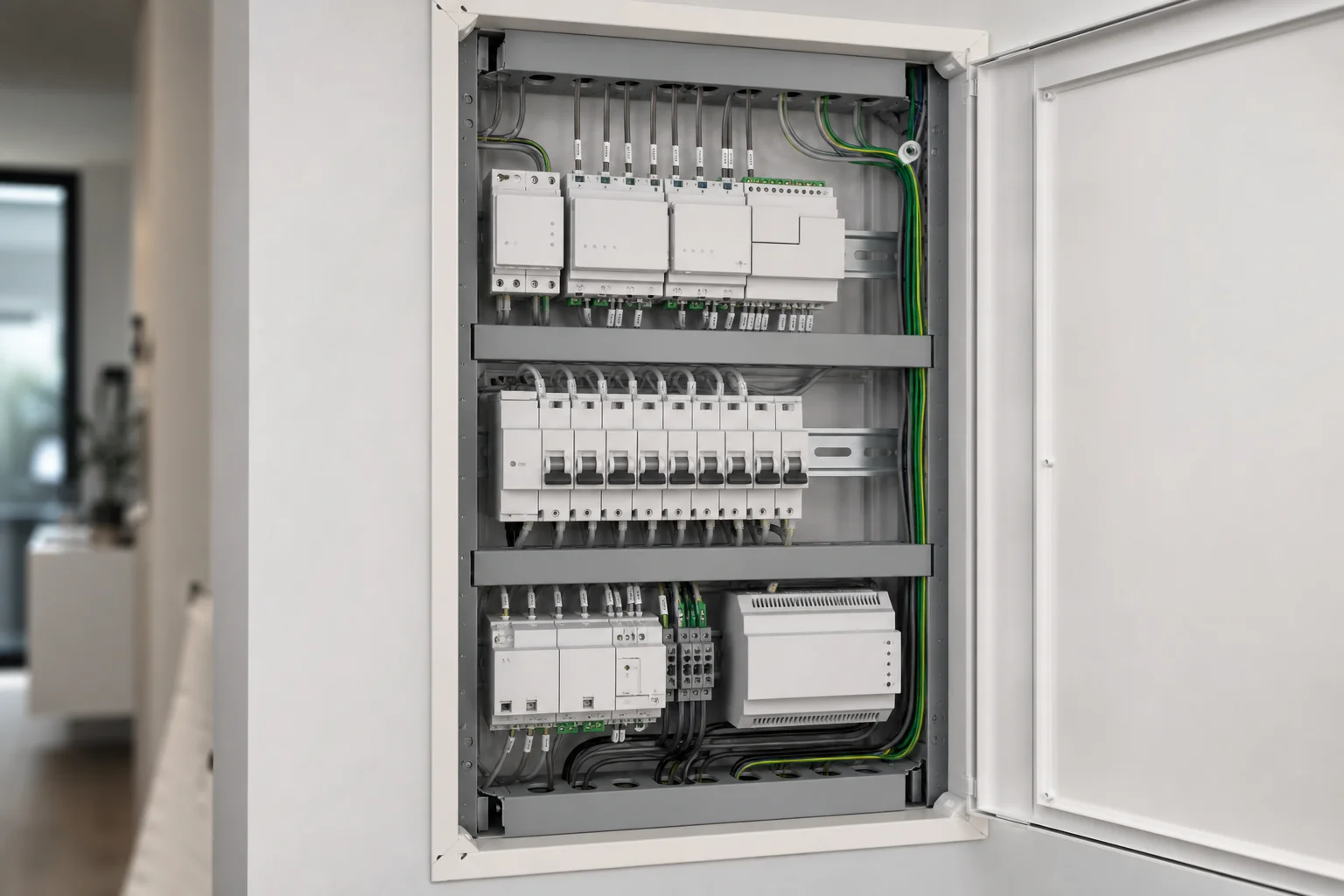
Building a single-family house in Poland takes 51 months on average according to 2025 data from Statistics Poland (GUS)[21], so the wiring decision has to be made at the design stage, long before plastering. For newly built houses, a wired installation remains the best choice: it needs no batteries, does not depend on radio signal quality, and will not age out with the next Wi-Fi generation.
The Voldeno system is built on exactly that premise: DIN rail modules connected over the wired Voldeno Bus, logic executed locally on the Hub (the house keeps working without internet), and the whole installation configured in Voldeno Studio. Detailed cost breakdowns for specific house sizes are collected in the guide How much does a smart home cost?
# The math is simple
A smart home stands on numbers, not on a wow effect. Shading automation cuts air conditioning costs by up to 70% in summer and heating costs by 10-30% in winter. A HEMS with battery storage raises PV self-consumption from around 30% to 70-80%, with Polish grant programmes covering a large share of the investment. Integrated security reduces the risk of flooding, fire and burglary, and the upcoming EPBD energy classes will make a house without automation simply worth less. This is not a gadget. It is an installation that pays for itself like any other investment in the building.
# Further reading
- What is a smart home and how does it work?
- How to choose a smart home system
- How much does a smart home cost?
- Bus topology and wiring
- Voldeno system overview
# Sources
- Carbone 4 institute study on external shading and energy use, Gazeta.pl (Polish)
- Battery storage under net-billing: raising self-consumption, Energia.biz.pl (Polish)
- ThinkCo report on the smart home market in Poland, Business Insider Polska (Polish)
- Future Mind study on smart home usage in Poland, Termomodernizacja.pl (Polish)
- How many Poles use smart home solutions, Globenergia (Polish)
- Oferteo report on house building in Poland, ITwiz (Polish)
- Building supervision authority (GUNB) permit data for 2025, MuratorDom (Polish)
- The role of automation in building modernisation, Money.pl (Polish)
- Negative energy prices on the Polish Power Exchange in March 2025, Globenergia (Polish)
- Tauron offer: weekend electricity up to 90% cheaper, Bankier.pl (Polish)
- The "Mój Prąd" programme, Gov.pl (Polish)
- NFOŚiGW: up to 1 billion PLN for home battery storage, WNP.pl (Polish)
- Official website of the "Mój Prąd" programme, MojPrad.gov.pl (Polish)
- The Czyste Powietrze programme in 2026: rules and grant amounts, Rankomat (Polish)
- Smart home: live smart, Bankomania PKO BP (Polish)
- IDC forecasts for the home monitoring and security category, CRN (Polish)
- The smart home market: technologies, trends and challenges, Obserwator Finansowy (Polish)
- New energy performance certificates with classes from A to G, MuratorDom (Polish)
- Photovoltaics in buildings will become mandatory: implementing the EPBD, Gramwzielone.pl (Polish)
- Smart home from scratch: costs and what to buy, MuratorDom (Polish)
- Statistics Poland (GUS): residential buildings completed in 2025, Inwestycje.pl (Polish)
- Electricity prices in 2026: how much does 1 kWh cost, Rankomat (Polish)