Configuration stored in the installation, free Studio, no subscription. Seven problems smart home owners face and how Voldeno answers each of them.
# A smart home without installer lock-in: how Voldeno does it
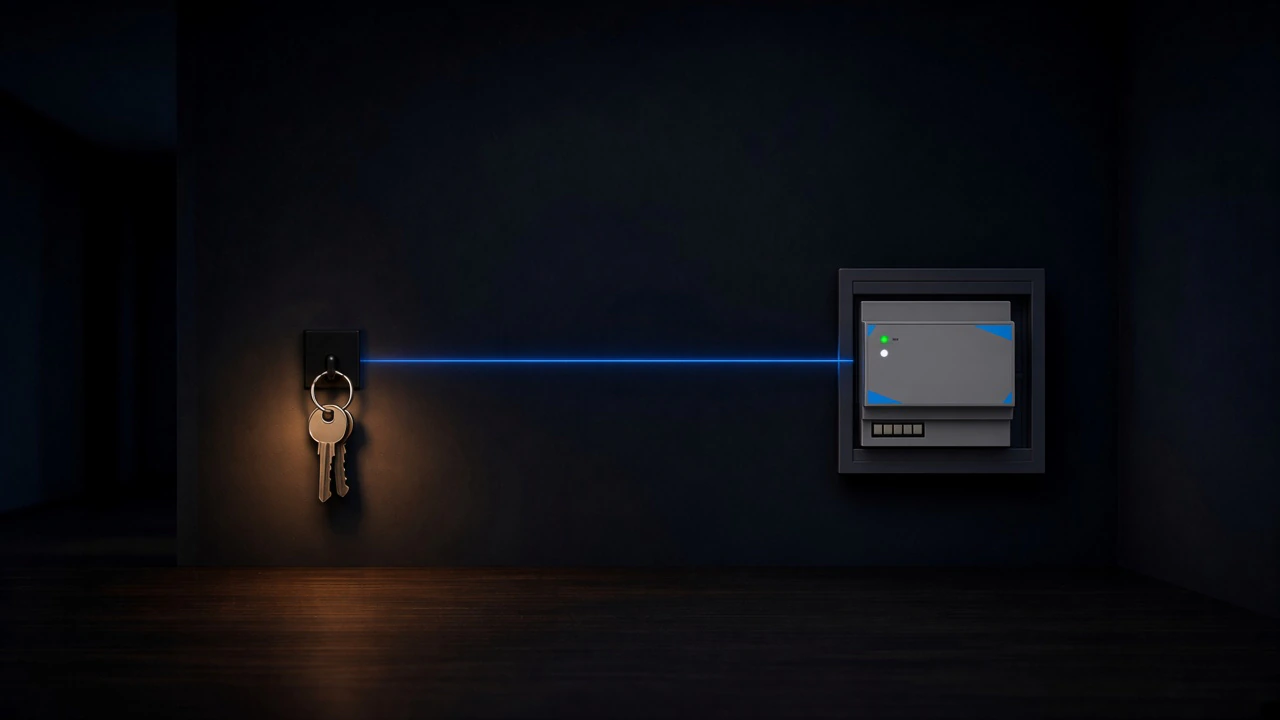
In Voldeno, the complete automation project is stored on the Hub module in the distribution board, not on the installer's laptop. Anyone who connects to the installation with the free Voldeno Studio sees the whole configuration and can change it. A smart home without installer lock-in starts with that one decision.
When choosing a system, investors compare module prices, panel designs and feature lists. They rarely ask what happens to the installation in five or ten years: who will change it, what that will cost, and what to do when the company that commissioned it stops answering the phone.
Below are seven problems that owners of a professional smart home face in many systems, and how Voldeno approaches each one. For two of them we say plainly where the limits are.
# Problem 1: the project stays on the installer's laptop
In many building automation systems the project lives in a single file, inside a paid configuration tool, on the laptop of whoever commissioned the installation. Add device passwords and encryption keys that only that person knows.
The owner has a working house but nothing that would let anyone else change it. If the installer leaves the trade or a dispute arises, the next contractor often has to rebuild the project from scratch. The client pays twice for the same work.
In Voldeno, the full project configuration is stored on the Hub module. Voldeno Studio reads and edits it directly from the installation, so a new installer needs nothing from the previous one. The project can also be exported and handed to a new owner when the house is sold.
The AI assistant in Studio makes someone else's installation easier to understand. After connecting to the building you can ask how the heating works or why the bathroom fan is off. The assistant answers with the block, register and schedule names from that specific project, and flags anything that was configured but never connected.
# Problem 2: every change needs a service visit
A house changes along with the people in it. The guest room becomes a nursery, a heat pump arrives, the weekly routine shifts. In systems where configuration requires specialist, licensed software, even changing what one button does means a ticket, an appointment and an invoice. Over a decade or more, those costs add up.
Voldeno Studio is free and runs on Windows, macOS and Linux. An owner with basic technical skills can change a heating schedule, add a scene or adjust the temperature threshold in the children's room on their own. Describing the change to the assistant in a plain sentence is enough. The assistant lists every operation before applying it, and nothing reaches the installation without confirmation.

For larger changes the installer does not always have to drive out. Through Voldeno Cloud they can configure and diagnose the installation remotely, and new logic does not require a module firmware update.
# Problem 3: the budget grows after the cables are in
The first quote for an automation system often covers only the devices on the bus. Later it turns out that complex scenarios need a separate logic server, the app needs a visualisation server, and integrating the alarm panel or inverter needs yet another gateway. Each has its own price and often its own configuration tool. The investor finds out when the cables are already in the walls.
In Voldeno, logic runs on the modules in the distribution board, so there is no separate logic server and no computer running around the clock. The Hub handles HTTP, TCP and UDP integrations within the same project, without an extra gateway. The Voldeno Mobile app for iOS and Android is free.
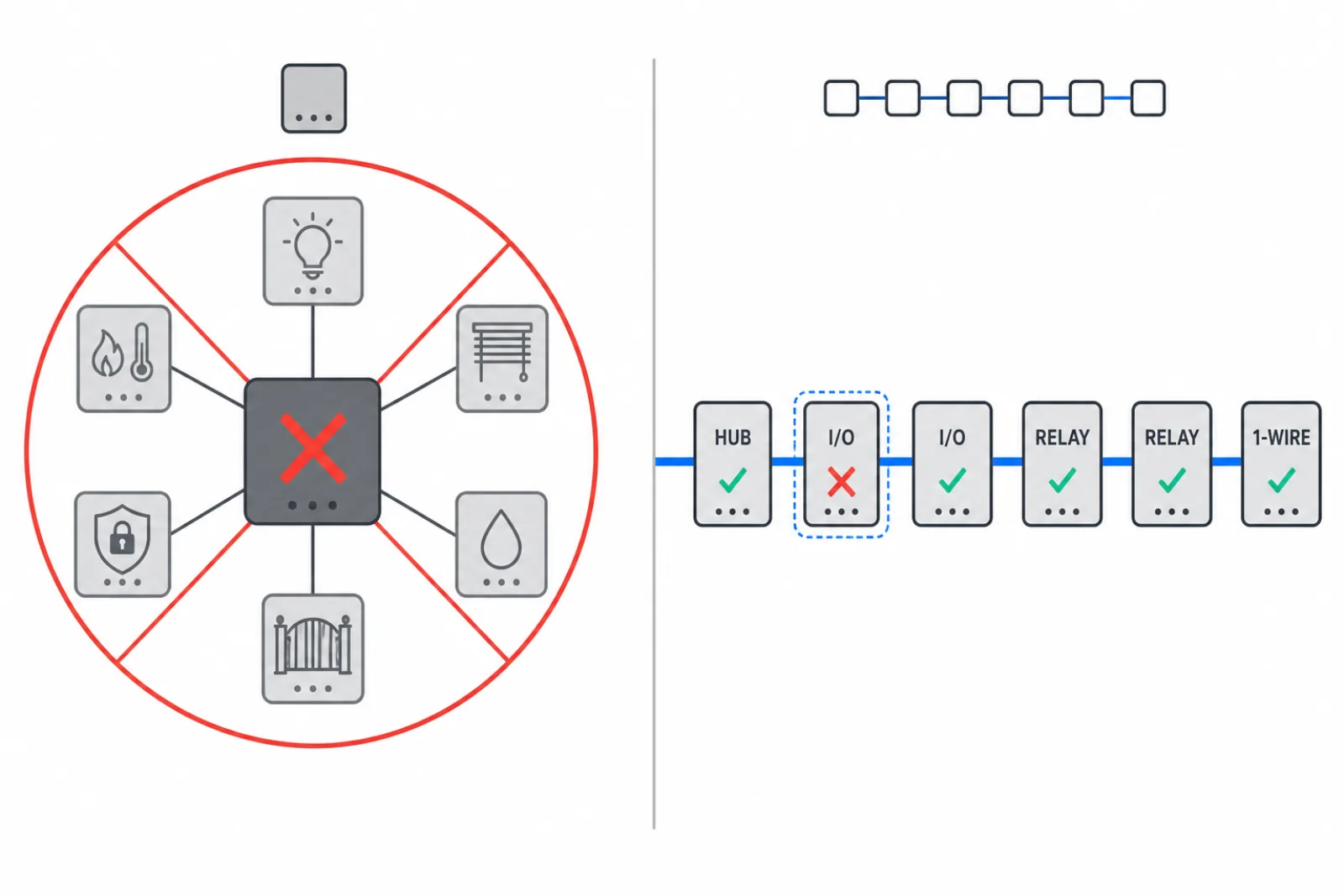
One caveat: Modbus RTU is a separate hardware interface and may require a dedicated module. It is worth including in the quote from the start. Typical hardware lists for three house sizes are in the guide How much does a smart home cost?.
# Problem 4: the app and remote access depend on one vendor
A bus standard does not always include an app. Residents then rely on a visualisation server and app from a specific company. If that company introduces a subscription, stops developing the app or discontinues the server, something new has to be bought and configured from scratch. The wiring in the walls will last decades; the app may not.
Voldeno Studio and Voldeno Mobile come from the same manufacturer as the modules, and both are free. Core home functions do not require a subscription.
All automation runs locally. Without internet, scenes, schedules and control keep working; only access from outside the house is lost. Ordinary momentary push-buttons are enough for everyday use, so the app is a convenience, not a condition for the house to work.
# Problem 5: quality depends on who did the programming
A standard's certification says that devices from different manufacturers can talk to each other. It says nothing about how well the logic of a particular house was designed. Two installations on the same standard can behave very differently, and errors often surface only after moving in, when fixes cost the most.
In Voldeno, any logic can be tested in Studio before it is deployed to the installation. The same virtual machine runs logic in Studio, in the digital twin and on every module, so what works in simulation works the same way in the distribution board. Every script runs in isolation: a faulty block stops itself, not the module or the bus.
Voldeno installers also complete a basic certification that takes one day.
We do not remove this risk entirely. Simulation checks the logic, not whether the idea behind it was a good one for the house. A careful installer still matters; Voldeno reduces the number of mistakes that can slip through unnoticed.
# Problem 6: the decision has to be made before plastering
Wired systems need cabling planned before the walls are closed. Investors choose a system before seeing it in operation, and changing course later means chasing walls.
Voldeno is a wired system too, and that does not change. Modules mount on a DIN rail in the distribution board and are connected by the Voldeno Bus, based on CAN-FD. The difference is in what you can do after that decision.
With star-topology wiring, the function of each output is defined in software, so repurposing a circuit does not mean touching cables. Additional modules join the existing bus when photovoltaics or garden irrigation arrive.
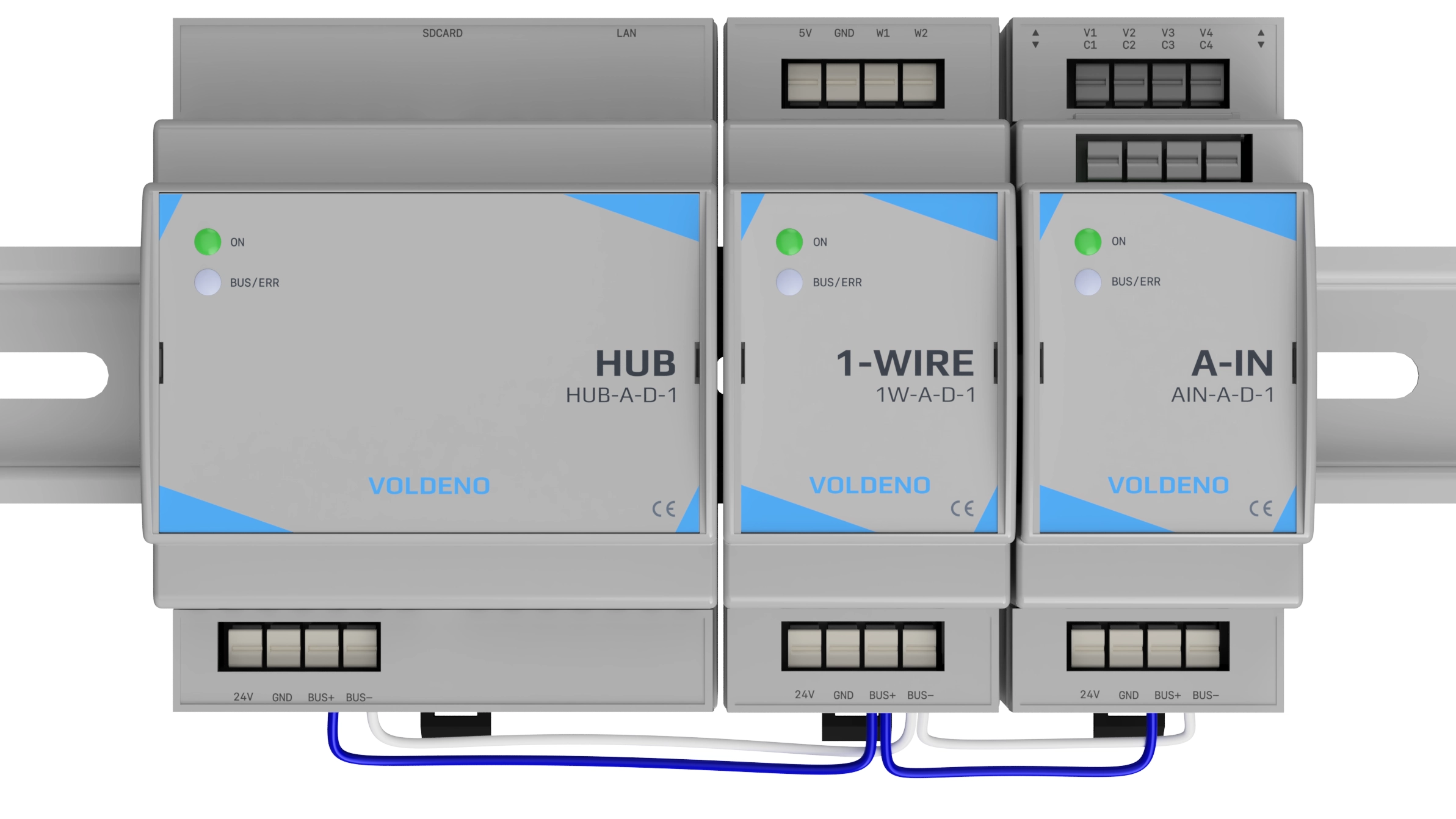
The decision itself can rest on more than a brochure. You can download Studio with its simulator and see how the logic behaves before buying a single module. What to plan before plastering is covered in The most common smart home design mistakes.
# Problem 7: security depends on the contractor's diligence
In many installations, remote access is set up by forwarding a port on the router to an IP gateway or visualisation server. Whether that gateway encrypts its traffic, has its default password changed and runs current software depends entirely on the installer's diligence. If something is missed, a stranger can control the gate, the lock or the heating. Owners usually have no way to check how exposed their house is.
In Voldeno, secure remote access does not depend on router configuration. The Hub is never exposed directly to the internet: it keeps its own outbound connection to Voldeno Cloud, and the app reaches it only through the cloud. No ports need to be forwarded.
Network connections between the Hub, Voldeno Studio, the app and the cloud are always encrypted, and both sides prove their identity with certificates before any data is exchanged. The Hub checks the user's permissions on every operation and installs a firmware update only if it carries a valid Voldeno signature. Details are in Voldeno security architecture.
# Seven problems in one table
| Problem for the owner | In many systems | In Voldeno |
|---|---|---|
| Project held by the installer | Project file and passwords on the contractor's laptop | Configuration stored on the Hub, read and edited in Studio |
| Cost of every change | Licensed tool and a service visit | Free Studio, AI assistant, remote configuration |
| Growing budget | Separate logic server, visualisation server, gateways | Logic on modules, IP integrations in the Hub, free app |
| App | Depends on another company's server, sometimes with a subscription | Studio and Mobile free, local operation without internet |
| Workmanship | Errors surface after moving in | 1:1 simulation before deployment, script isolation |
| Decision before plastering | Choice made without testing | Still required, but functions change in software |
| Security | Gateway exposed to the internet through port forwarding | Hub not exposed to the internet, encryption and certificates on network connections |
# Questions to ask before signing
Whatever system you choose, ask the installer four questions:
- Where will the project be stored, and will I get full access to it?
- With what tool, and at what cost, can I change a schedule or scene after handover?
- What additional devices and licences are needed for the app and remote access?
- How will communication inside the house and access from outside be secured?
The answers will tell you more about the costs over the coming years than the price of the modules.
A smart home without installer lock-in does not come from a clause in a service contract. In Voldeno it comes from the architecture: the project lives in the installation, the tools are free, and the logic runs locally. You choose an installer for the quality of their work, not because they are the only one who knows your house.